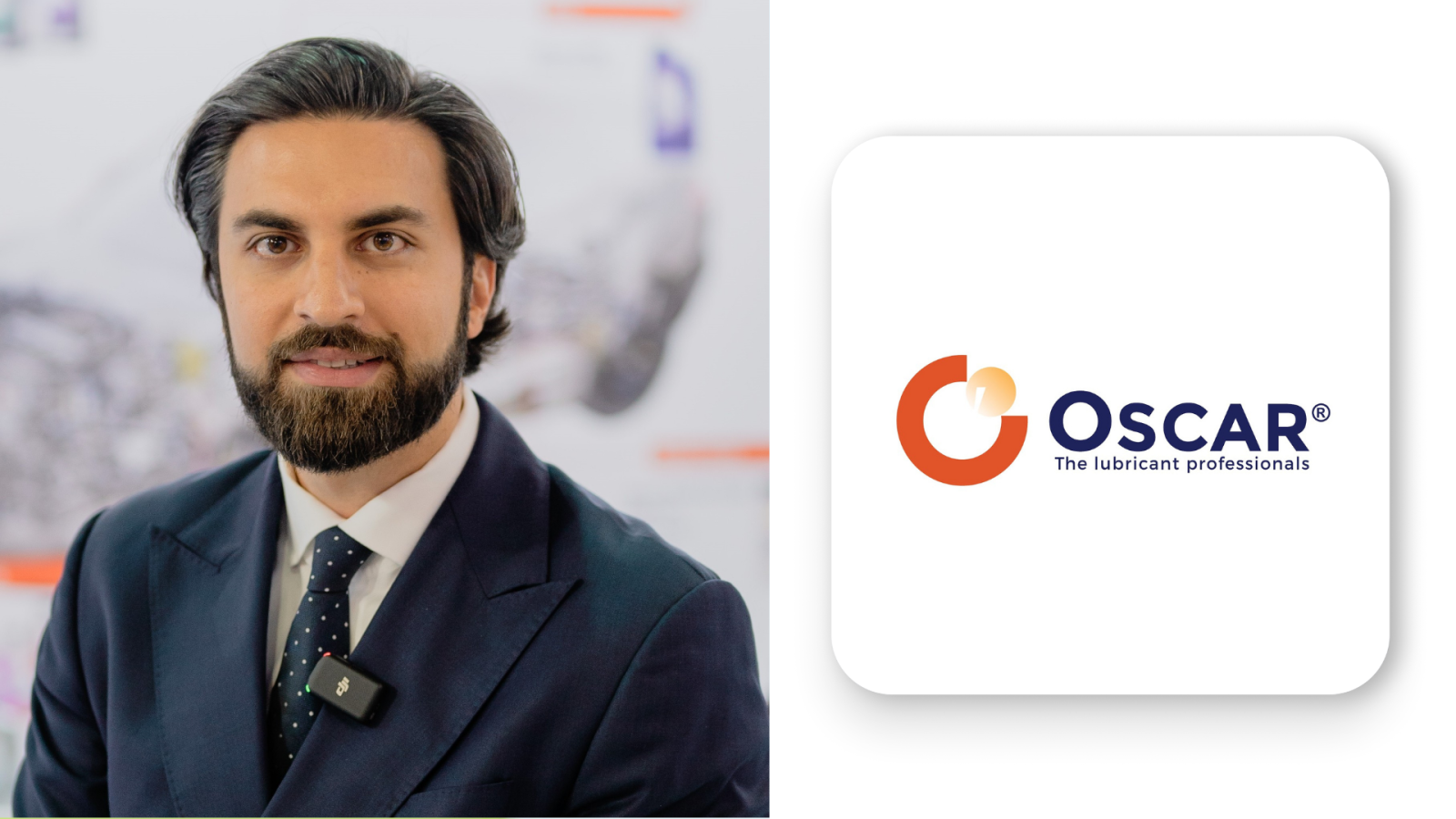
We are delighted to welcome Charles du Bois, Lubrication Application Engineering Specialist at 5R Tribology, to the conference line-up for Lubricant Expo Middle East 2026. With a career spanning over three decades, Charles brings a wealth of experience from industries as diverse as offshore machinery, mining, automotive, and high-tech manufacturing.
As a vocal advocate for proactive lubrication strategies, Charles believes that tribology is not just an engineering concern but a business-critical discipline. At Lubricant Expo this January, he will share insights on how companies can unlock efficiency, reduce downtime, and save costs by understanding and applying the fundamentals of lubrication.
Tell us about yourself, what first drew you into the field of tribology and lubrication engineering?
After I graduated as mechanical engineer at the Technical University of Applied Sciences in the Netherlands in 1985, I noticed an interesting advert in a newspaper for a job as sales engineer for oil filters and filtration systems for hydraulic equipment. A few years later I went for a position as international service engineer at a company called Tribol GmbH is Germany. This relatively small but successful company specialized in high performance lubricants really got me going.
Tribology is present everywhere. I have been involved in the lubrication of computer components (hard-disk-, CD-ROM drives), automotive on-car and manufacturing, heavy duty industry (steel/ cement etc), through lubrication of the biggest mining type machines and very unique and enormous offshore machinery. There are probably very few industries or industrial processes which I cannot explain to my children.
The technologies of lubrication on the other hand are not too complicated; it is all about reducing friction and wear of moving surfaces. Even in oil drilling the same processes take place between the drill and the hole and funny enough the same lubrication terminology is used there as well.
What are your current priorities and responsibilities? What projects are you working on?
I see that there is a knowledge drain on lubrication/ tribology technology going on for several years now. It is quite difficult to get young engineers enthusiastic to get involved in lubrication/ tribology technology despite the very wide scope and wide variation of opportunities this technology offers.
There are enormous opportunities for improving production process efficiencies and delivering tangible cost savings for the end-users.
My priority is to assist companies involved in tribology/ lubricants/ lubrication to get their staff knowledgeable in this field and especially focussing on the actual applications. There are enormous opportunities for improving production process efficiencies and delivering tangible cost savings for the end-users.
What are the most frequent lubrication-related failure modes you see and what proactive measures can organizations take to prevent them?
The main failure is not a component failure but the failure of engineers in understanding the root cause of a component failures. Over 70 – 80% of all mechanical issues are lubrication related. Although the cost for lubricants only amounts to max. 3% of the maintenance budget, the losses due to lubrication amount up to 10 – 30% of the maintenance budget. This does not include losses due to downtime. The value proper lubrication delivers is disproportional to the low cost of lubricants.
We need to understand where in the process lubrication can prevent failure or at least significantly slow down the wear process. Current maintenance strategies are based on predictive maintenance and several checks are put into place (vibration sensors, temperature sensors on bearings etc.). When a signal comes from the sensors, maintenance staff can predict the time still available to fix the problem before it turns into a catastrophic failure. Problem mitigation can be planned providing shortest downtime possible.
However, all these sensors are based on failure signals no matter how small hence the component will fail shortly. This is too late for lubrication; lubrication improvement must be implemented before the failure signal appears. Lubrication improvement should be implemented when all is operating fine, when the machine operates in the proactive regime. This is also where a problem occurs “Why spending money on a machine which is running fine?”
Lubrication improvement must be implemented before the failure signal appears.
Implementing improved lubrication mitigates the root cause of the issue which leads to NO downtime at all.
In your view, what are the most critical elements of an effective lubrication management program — and where do companies usually fall short?
As I said before, knowledge and understanding. Understand the real basics of lubrication. The best program will fail if the fundamentals are not understood and in place.
Tribology is not a nice to have it is a crucial technology for efficient production whereby top-level management (Exec) should get involved and understand. It is no longer a sole matter of the engineering staff. This should be supported on all levels within the organization.
Why are events like Lubricant Expo Middle East important for your industry?
The Middle East is an area of growth, locally as well as exporting into other parts of the world. The manufacturing/production of other products than oil and gas is growing and it is therefore important that the local producers get understanding of the importance of lubrication and tribology.
Don’t miss the opportunity to hear from Charles du Bois on stage at the Lubricant Expo Middle East, where he will speak in the session: Optimizing Equipment Reliability With Lubrication Management, on Tuesday 20 January at 2:50pm – 4:05pm.